If you're searching for backyard remodeling near me Woodbury, MN, you already know your yard isn't pulling its weight. Maybe the patio is cracked, the lawn gets more weeds than foot traffic, or you just want somewhere worth sitting outside after work. This guide breaks down real East Metro cost tiers, the upgrades Woodbury homeowners request most, and the Minnesota-specific planning details that catch people off guard.
6 Backyard Remodel Ideas Woodbury Homeowners Request Most
Backyard projects in Woodbury and the surrounding East Metro tend to fall into a handful of categories, from weekend-sized refreshes to full hardscape builds. Scanning these six options first makes it easier to see where your own project fits before you start comparing costs.
Idea 1: The Yard Refresh
The cheapest honest upgrade for a tired backyard is a refresh. It's built from a weekend of clean-up, fresh mulch, new plantings, and basic lighting, with no construction crew required.
This is the entry point for homeowners who want a visible difference without committing to a full remodel. Once a refresh uncovers a bigger issue, like a failing patio or a deck that's past its prime, our siding, decks, and exterior services page covers what comes next.
Idea 2: The Paver or Concrete Patio
Poured concrete, interlocking pavers, and natural stone all price out differently per square foot, and the right choice depends on more than looks. In Minnesota specifically, interlocking concrete pavers are often the better bet because their flexible joints absorb frost movement without cracking, and individual units can be swapped out if one gets damaged.
Poured concrete slabs, by contrast, tend to crack as the ground heaves through freeze-thaw cycles unless the base is engineered correctly. The Twin Cities area in the south-central part of the state uses a 42-inch frost depth for code compliance. Ask any contractor how deep they're excavating before pouring or laying your patio base, since that single detail determines whether your patio survives its first Minnesota winter.
Pergolas, Pavilions, and Four-Season Porches
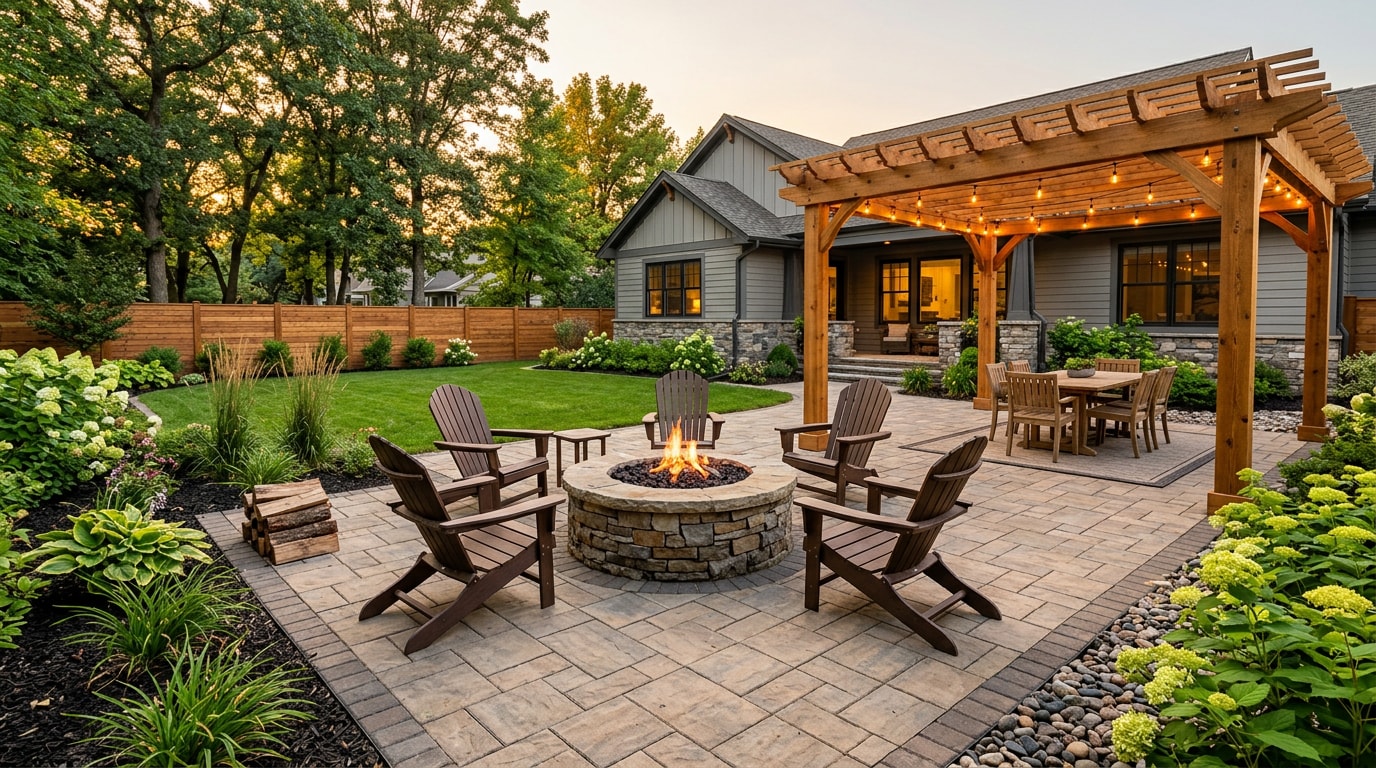
Pergolas and pavilions give a backyard shade and shelter even in yards with no mature trees. They work as a freestanding structure or attached to the house, and they instantly define a seating or dining area that otherwise feels like empty lawn.
For Woodbury yards with full afternoon sun, a pergola is often one of the highest-impact, lowest-footprint additions available. If you'd rather extend your usable season into a Minnesota winter rather than just block summer sun, a four-season porch is worth comparing against a pergola before you commit.
Outdoor Kitchens and Cooking Spaces
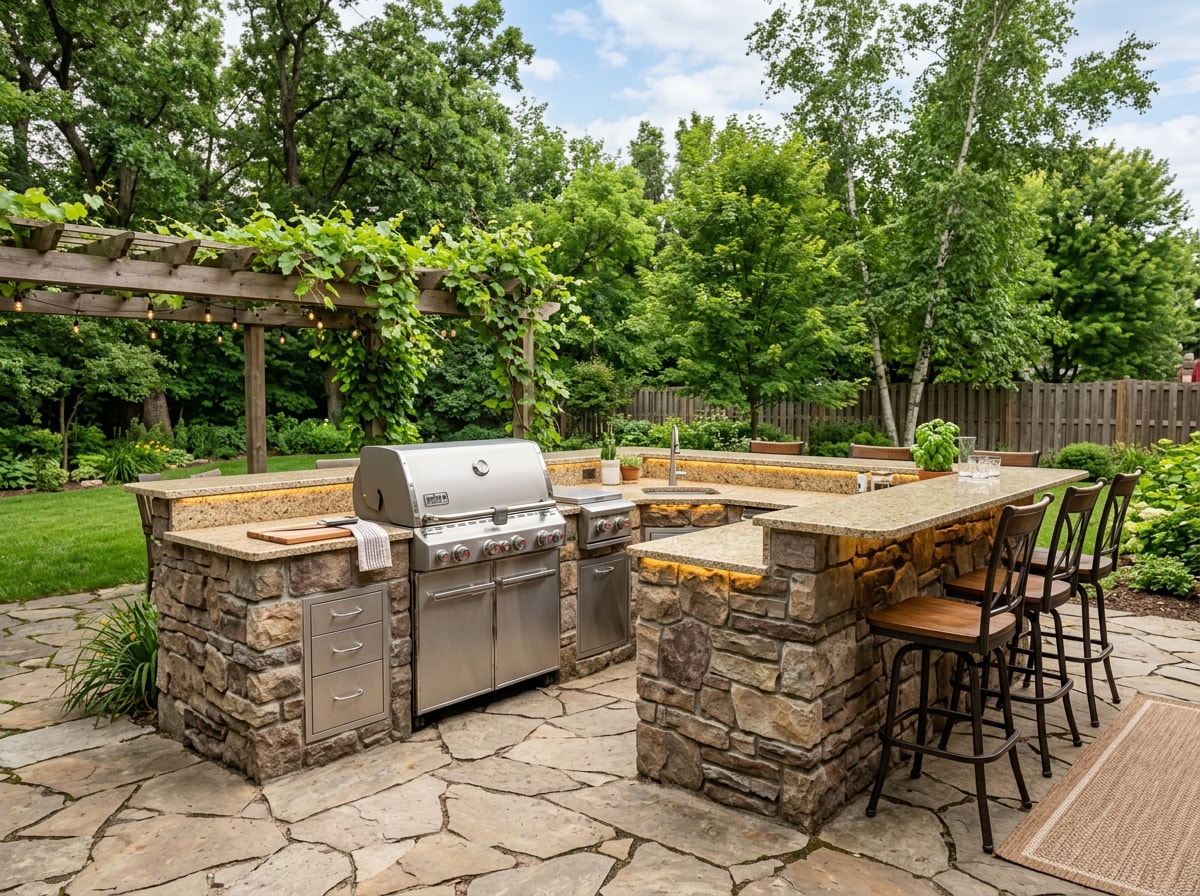
A personalized outdoor kitchen turns the idea of cooking outside into something you'll actually use most weekends. Built-in grills, prep stations, ambient lighting, and comfortable seating turn a patio corner into a genuine extension of the house.
These spaces range from a simple grill island to a full kitchen with a fridge, sink, and bar seating, depending on budget.
Multi-Level Decks for Sloped Lots
Multi-level decks make the most of uneven terrain, something plenty of East Metro lots have thanks to rolling grades and walkout basements. Instead of fighting a slope, a tiered deck design uses it to create distinct zones for dining, lounging, and grilling.
Material choice matters just as much as layout. Pressure-treated pine is the cheapest entry point, while Trex offers impressive warranties on its composite decking products: 25 years for Enhance, 35 years for Select, and an industry-leading 50 years for Trex Transcend, Trex Transcend Lineage, and Signature , which is roughly how long you can expect the material to resist fading, staining, and splintering with minimal upkeep. Our deck installation team can walk through which tier of material actually makes sense for your yard's sun exposure and slope.
Cozy Fire Pit Areas for Cool Evenings
A fire pit with a real seating area is hard to beat for sheer hours of enjoyment per dollar spent. It extends usable backyard time well into spring and fall, which matters in a climate where outdoor season already feels short.
Whether you go with a wood-burning pit or a gas unit built into a patio, clearance from structures and combustible materials matters for safety. Build campfires at least 25 feet away from tents, shrubs and anything that can burn, and use chimneys, outdoor fireplaces and fire pits outdoors at least 10 feet away from your home or anything that can burn. Review the U.S. Fire Administration's outdoor fire safety guidance before finalizing placement, especially near fences, decks, or overhangs.
Backyard Remodel Costs by Tier in the East Metro
Before getting into material choices or contractor quotes, it helps to frame your project by scope rather than by feature list. Nationally, a full backyard renovation averages $15,000 to $50,000, and a common rough benchmark for new-build landscaping overall is about 10 percent of the home's value.
Neither of those national figures accounts for what Minnesota adds to the equation. Woodbury and the East Metro sit on heavy clay soil, require footings below the region's roughly 42-inch frost depth, and work with a build season shorter than most of the country's. Those three factors tend to push local projects toward the higher end of national ranges, sometimes by 10 to 20 percent, mostly from extra excavation, base material, and drainage work.
| Tier | Typical Cost | What It Covers | Rough Timeline |
|---|---|---|---|
| Cosmetic Refresh | ~$10,000 | New plantings, mulch, minor patio patching, basic lighting | 1–2 weeks |
| One Major Feature | ~$30,000 | A deck, patio, or pergola, plus full landscaping and irrigation | 3–6 weeks |
| Full Outdoor Living Space | ~$75,000+ | Multiple hardscape elements, mature plantings, architectural lighting | 10–16 weeks |
Outdoor living investments also tend to hold value better than many interior remodels, though exact recovery varies by project. A cost recovery estimate for representative outdoor remodeling projects is influenced by many factors, including project design, quality of materials, location, age and condition of the home, and homeowner preferences. That variability, outlined in the NAR Remodeling Impact Report: Outdoor Features, doesn't mean every dollar comes back at sale, but it's a reasonable argument for treating a backyard remodel as an investment rather than pure expense. Our remodeling design guide for Woodbury covers how design choices affect both cost and resale appeal in more detail. A full overview of our general contractor services can also help you figure out which tier fits your goals before you start getting quotes.
What's Typically Included at $10,000
A $10,000 refresh is driven by a softscape overhaul:
- Removing overgrown or dead plants
- Installing 20 to 30 new foundation plantings
- Adding a layer of premium mulch and clean bed edging
- Minor hardscape patching (patio leveling, paver resets)
- A basic lighting pass
It won't change your backyard's layout, but it noticeably changes how it feels to be in it.
What's Typically Included at $30,000
At the $30,000 mark, most projects shift from cosmetic to structural. This tier typically covers one major feature, like a deck, patio, or pergola, paired with full landscaping, irrigation, and quality materials throughout. It's the most common renovation tier among homeowners who've outgrown a basic refresh but aren't ready for a full-scope rebuild.
Because it centers on a single feature, this budget gives you room to spend more on that one element without stretching it too thin. Browsing our project gallery is a useful way to see what $30,000 actually looks like built out in a real East Metro yard.
What's Typically Included at $75,000+
At $75,000, projects usually combine multiple hardscape elements, a patio, fire pit, and outdoor kitchen foundation, for example, rather than just one. Professional irrigation, mature plantings instead of starter-size ones, and architectural lighting round out this tier.
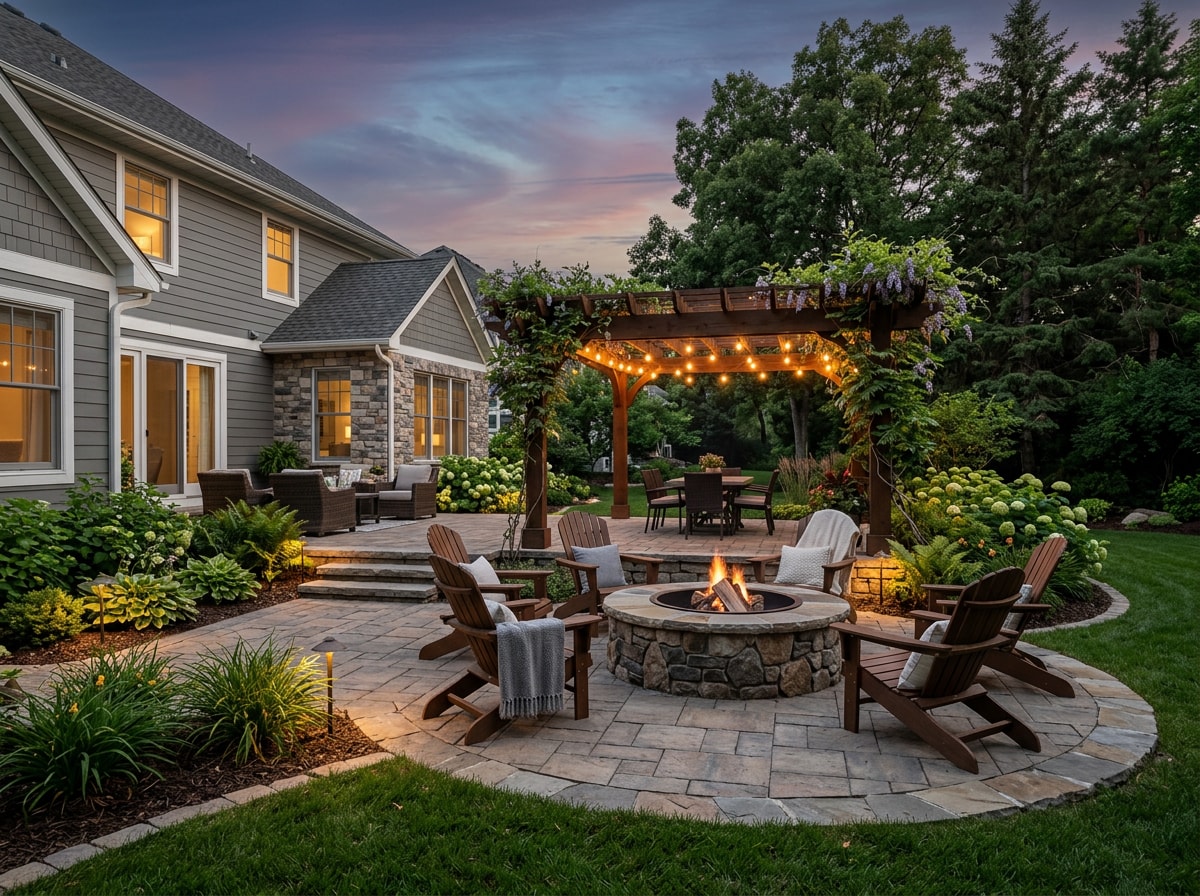
This is where a backyard starts functioning as a true outdoor living space rather than a yard with features added to it. Design coordination between elements matters most here, since patio, kitchen, and lighting all need to work together visually and functionally.
Step 1: Define Your Renovation Goals
Before picking materials or getting contractor quotes, it helps to classify your project into one of three goal categories. Doing this early gives you a rough budget range and timeline expectation before you've spent a dollar.
| Goal Category | What It Solves | Typical Budget | Typical Timeline |
|---|---|---|---|
| Functional Upgrade | Cracked patio, poor drainage, retaining wall for a slope | $10,000–$30,000 | 1–2 weeks |
| Outdoor Living Expansion | New zones: fire pit patio, pergola dining area, outdoor kitchen | $30,000–$75,000 | 3–6 weeks |
| Complete Backyard Transformation | Full redesign combining multiple elements | $75,000–$150,000+ | 10–16 weeks |
Step 2: Understand Minnesota's Building Season and Permit Timeline
Minnesota's construction window runs roughly late April through mid-November, which compresses the planning timeline compared to warmer states. Understanding where demand peaks helps you avoid scheduling delays and lock in a contractor before their calendar fills.
Late April and May see the first rush as homeowners act on spring planning, followed by a packed peak summer when most crews are booked weeks or months out. A secondary, often less competitive window opens in September and October before the season closes.
Permits add more time to account for. Permits are required for any owner or contractor who intends to construct, enlarge, alter, repair, move, demolish, or change the occupancy of a building or structure, and a permit is also required to erect, install, enlarge, alter, repair, remove, convert, or replace any gas, mechanical, electrical, plumbing system, or other equipment when the installation is regulated by the code.
The Minnesota Department of Labor and Industry oversees the Minnesota State Building Codes, including the adoption and enforcement to ensure the safety and integrity of structures, which are the minimum construction standard throughout the state. You can review current adoption details on the Minnesota Department of Labor and Industry's code page. Projects involving retaining walls over four feet or structures attached to the home typically need review under this code, adding another one to three weeks depending on your city's process. Checking our Woodbury, MN service area page early can help you understand local requirements before a permit delay pushes your project into next season.
Step 3: Evaluate Contractors the Right Way
Vetting a contractor goes beyond checking reviews. Ask technical questions that reveal whether they actually understand local conditions.
- How deep do you excavate for frost protection on this soil type?
- How do you handle clay-heavy sites that drain poorly?
- Are you licensed in this municipality?
- How do you adjust base depth for our frost line?
- If grading reveals a drainage or foundation issue, who handles the structural side?
Woodbury and the surrounding area sit on dense clay that drains poorly and shifts more than sandy soils further west. A vague answer on any of these points is worth noting. If a backyard project uncovers a bigger structural issue, like a retaining wall tied to foundation drainage, our structural repair team can evaluate it alongside the exterior work.
At BRZ Construction, owner Brett Zollinger brings more than 20 years of construction experience and a commitment to clear communication and quality craftsmanship to every project, including backyard patios, decks, and outdoor living spaces across Woodbury and the East Metro. You can call direct at 651-247-9422 to talk through your project, or visit {{SITE_URL}} to see the full range of services before requesting a quote. When you're ready to start those conversations, get a free estimate and we'll walk your yard with you in person.
FAQ
How much does it cost to redo a backyard in Woodbury, MN?
Backyard remodels in the Woodbury area typically range from $10,000 for a cosmetic refresh to $75,000 or more for a project with multiple hardscape features. Mid-range renovations centered on one major feature, like a deck or patio, usually land around $30,000. Local clay soil and frost-depth requirements can push costs toward the higher end of national averages.
How long does a backyard remodel take in Minnesota?
A single-feature project, like a patio or deck, usually runs 3 to 6 weeks once construction starts. Full outdoor living transformations with multiple elements take 10 to 16 weeks from design through final walkthrough, factoring in permitting and Minnesota's shorter build season.
Do I need a permit to remodel my backyard in Minnesota?
Permits are typically required for structures attached to the home, retaining walls taller than four feet, and significant drainage or grading changes. Standalone patios, simple landscaping, and most fire pits usually don't require one, but requirements vary by municipality, so confirm with your city before construction starts.
Does a backyard remodel add value to my home?
Outdoor features generally hold value better than many interior upgrades, though the exact return depends on project scope, materials, and your home's condition and location. Treat the investment as a mix of resale value and years of personal use rather than a guaranteed dollar-for-dollar payback.
What's the best time of year to start a backyard project in Woodbury?
Late winter and early spring, before the April and May rush, is the best time to lock in a contractor and finalize design. Minnesota's build season runs roughly late April through mid-November, and September and October often have more contractor availability than peak summer.