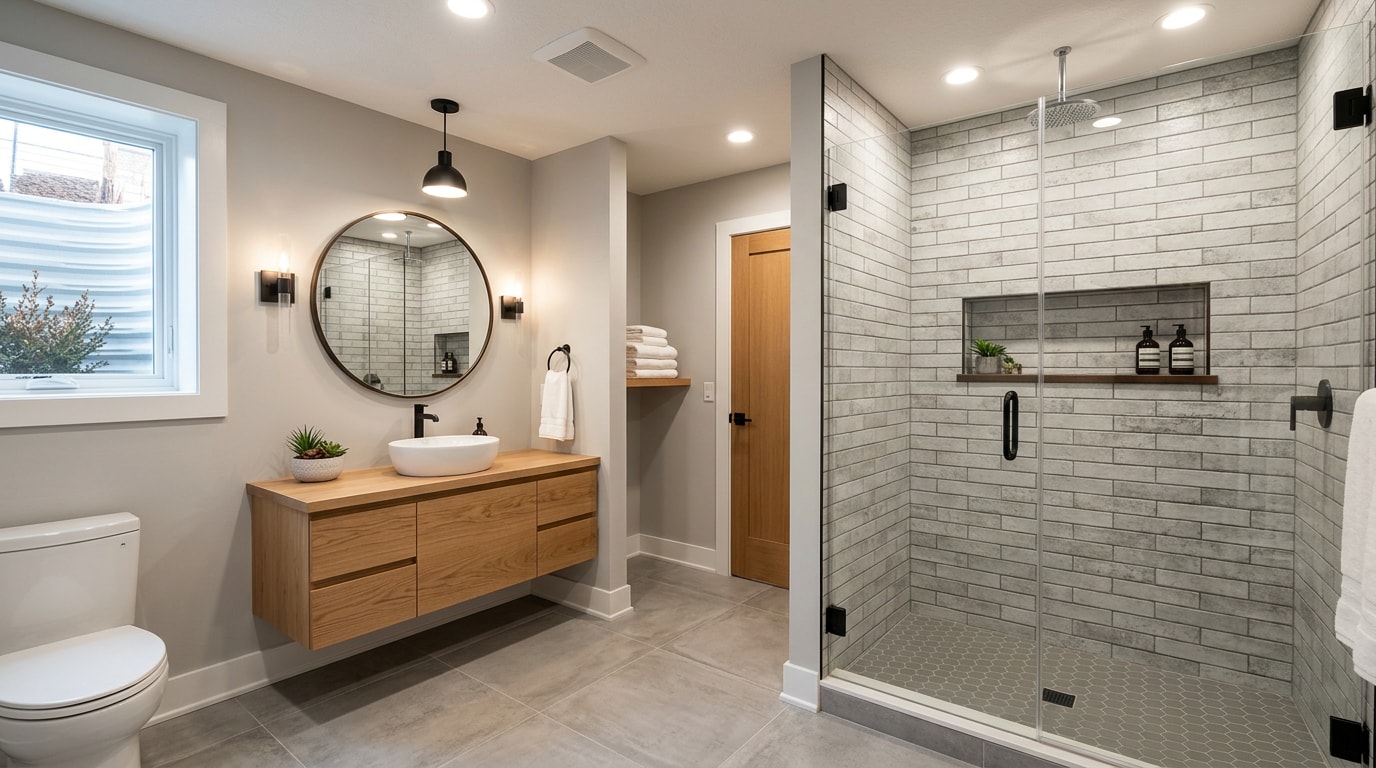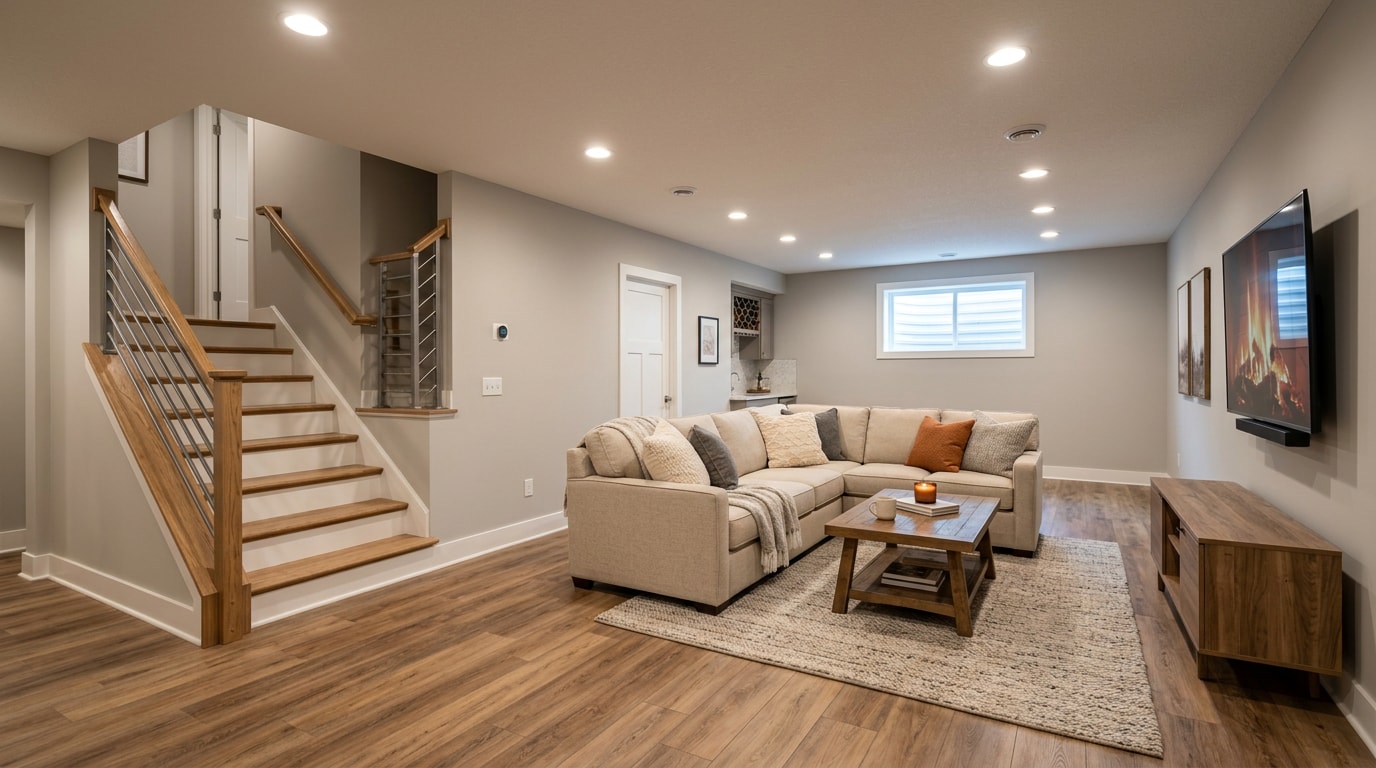
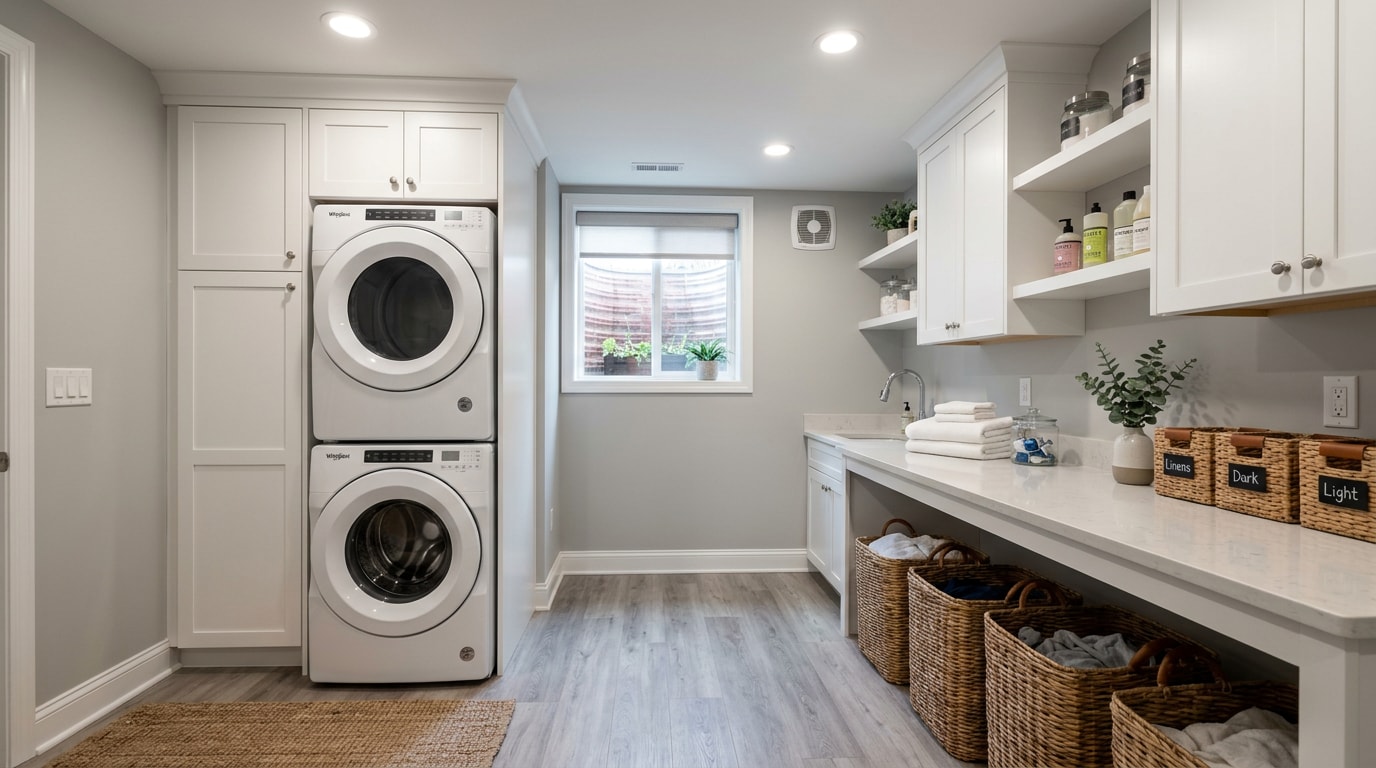
A basement laundry room makeover in Hugo, MN can turn a cold, cluttered utility corner into one of the most-used rooms in the house, and most of the upgrades that make the biggest difference don't touch a single pipe. The trick is knowing which changes are weekend projects and which ones need a licensed contractor before you start tearing into walls. Here's what actually works in a Minnesota basement, what it costs in 2026, and where homeowners in Hugo tend to get tripped up.
Start With an Honest Walkthrough
Before buying anything, walk your space and sort every item on your wish list into two piles: cosmetic and structural. Paint, shelving, and lighting upgrades are doable in a weekend. Moving plumbing lines, adding a 240V circuit for the dryer, or finishing a ceiling around ductwork calls for a licensed trade.
Minnesota basements add their own wrinkles to a standard laundry remodel. Humidity swings hard between summer and winter, foundations deal with freeze-thaw cycles, and the mix of finished versus unfinished basements across Hugo neighborhoods means a generic national checklist doesn't always apply. In the basement laundry projects our crew has handled around Hugo, the single most common surprise is moisture coming up through an unsealed slab, not a leaky supply line. That's a floor-prep problem, not a decor problem, and it changes the order you should tackle this project in.
If your scope includes moving appliances, adding a utility sink, or reworking the room's layout, our basement finishing team can walk the space with you before you commit to a design. You can also see how we approach similar projects on our Hugo, MN area page.
Basement Laundry Remodel Cost Breakdown
A basic refresh (paint, new shelving, upgraded lighting) typically runs $500 to $2,500 in the Twin Cities area, mostly in materials if you handle the labor yourself. A mid-range remodel that adds waterproof flooring, built-in cabinets, and recessed lighting generally lands between $3,500 and $9,000, depending on cabinet quality and square footage.
A full utility-room build-out involving new plumbing, electrical circuits, or relocating a washer and dryer hookup pushes the budget to $10,000 to $25,000 or more, since it requires licensed trades and inspections.
| Project Level | Typical Hugo/Twin Cities Range | What's Included |
|---|---|---|
| DIY Refresh | $500 to $2,500 | Paint, shelving, lighting swap |
| Mid-Range Remodel | $3,500 to $9,000 | Flooring, cabinets, lighting, minor repairs |
| Full Build-Out | $10,000 to $25,000+ | Plumbing/electrical, permits, contractor labor |
These are planning ranges, not quotes. Contractor availability and material lead times in the east metro shift pricing month to month, so treat the table as a starting point for your own bids.
It's also worth knowing what a laundry room does for resale, since it changes how much of that budget you can justify. The two most wanted features in a home are a laundry room and a patio, according to NAHB's latest study on buyer preferences, the What Home Buyers Really Want Study . If you're weighing a mid-range remodel against a full build-out, that buyer demand is one more reason the investment tends to hold up. Ready to put real numbers to your space? Get a free estimate before you buy a single shelf.
Storage and Built-In Shelving That Actually Gets Used
Storage upgrades deliver the biggest functional payoff in a basement laundry makeover, and none of them require touching plumbing or wiring.
- Overhead cabinets reclaim wall space above the washer and dryer without eating floor area.
- Pull-out hampers hide dirty laundry while keeping the floor clear.
- Vertical shelving climbs toward the ceiling for detergent and seasonal items you don't need daily, with open shelving up high and closed storage lower down.
- Corner and over-the-door organizers work well in tight basement closets where every inch counts.
- Stackable bins and fold-down ironing boards suit compact spaces because they disappear when not in use.
Mount shelves at a reachable height, not stretched to the ceiling just because the wall is tall. Soft-close hinges and labeled baskets turn basic cabinets into something that gets used daily instead of becoming a dumping ground.
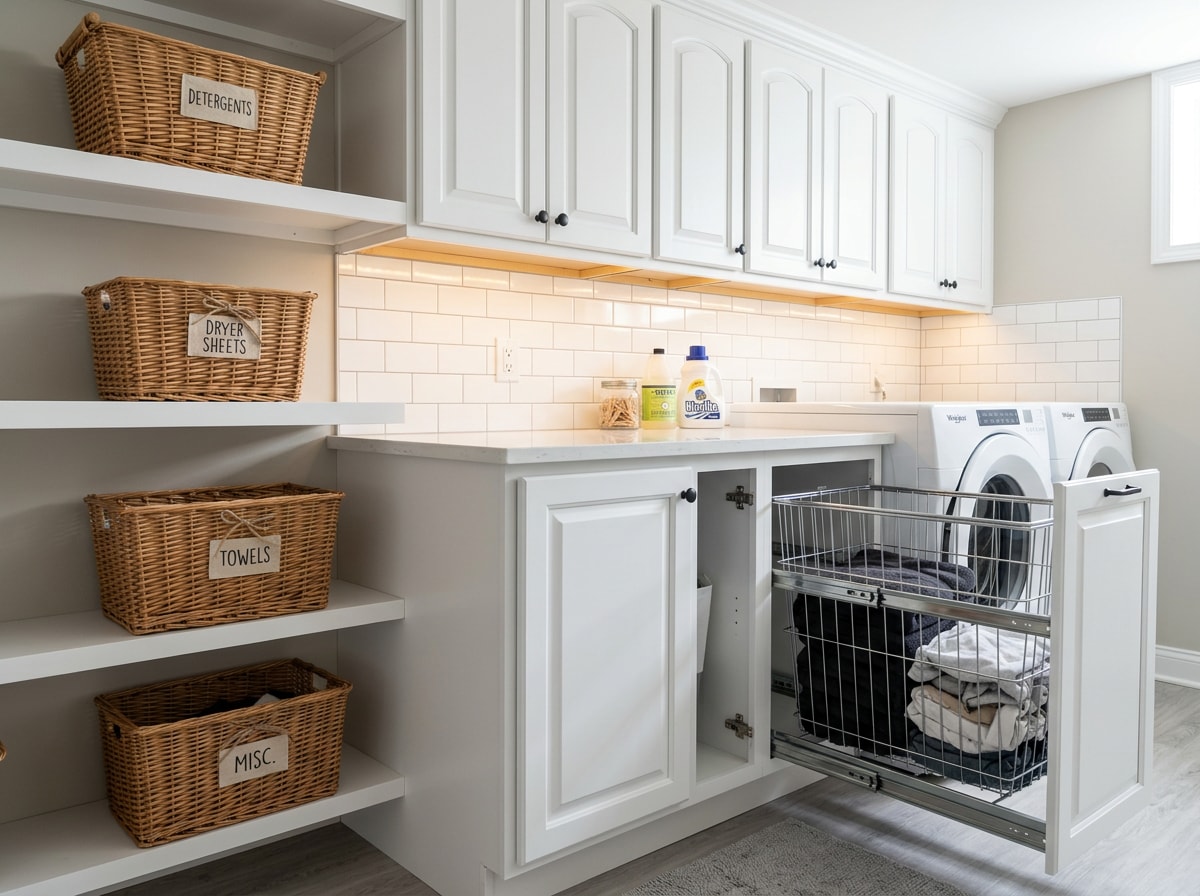
If your project includes custom cabinetry or structural shelving beyond a DIY kit, see examples of similar work on our projects page.
Lighting That Makes a Below-Grade Room Usable
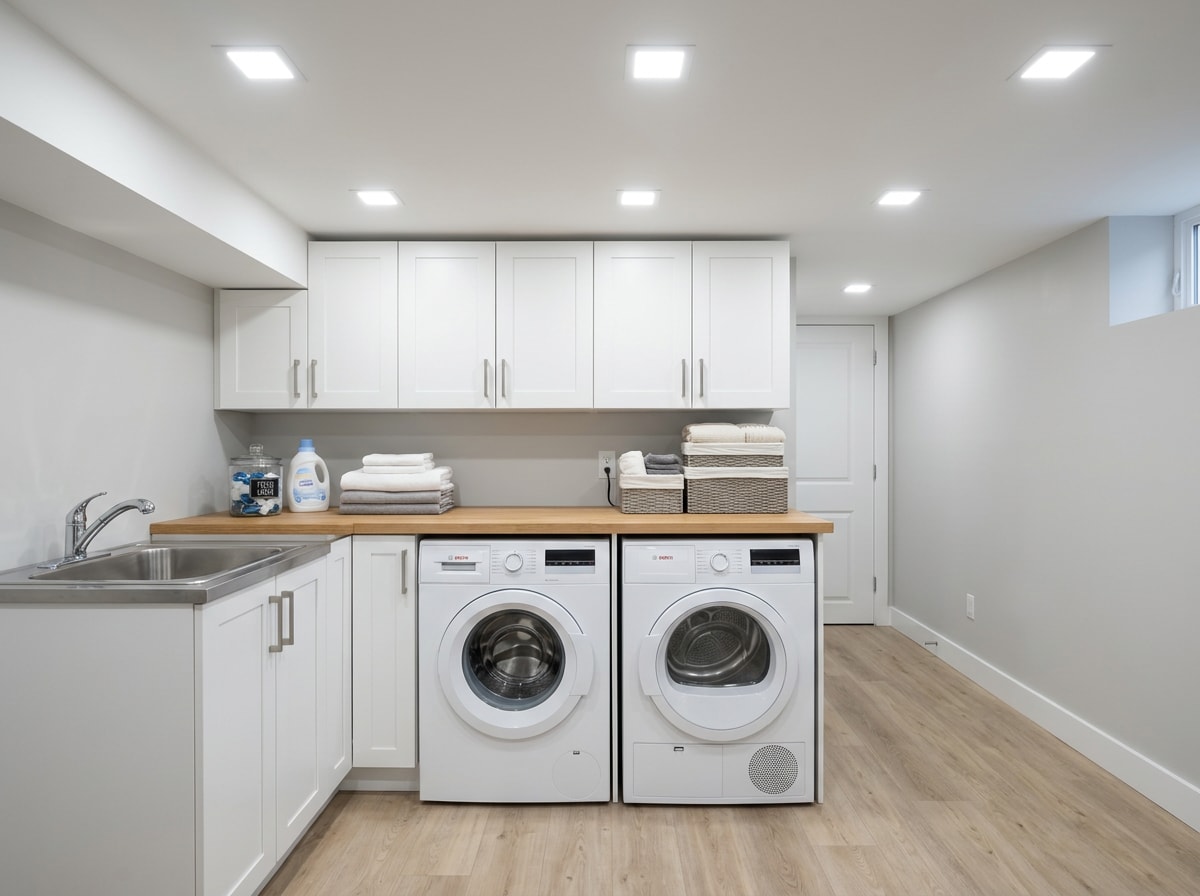
Basement laundry lighting gets overlooked until the room feels gloomy no matter the time of day. Recessed LED lighting spread evenly across the ceiling eliminates shadows better than a single center fixture ever could.
Add task lighting under cabinets near the folding counter, since overhead light alone creates shadows right where you need visibility most. ENERGY STAR certified downlight light fixtures use 90% less energy than traditional models using incandescent light bulbs , which matters in a room that often runs lights all day. Pair better lighting with light wall paint (whites, soft grays, pale blues) to bounce available light around the room.
Flooring That Can Handle a Basement Laundry Room
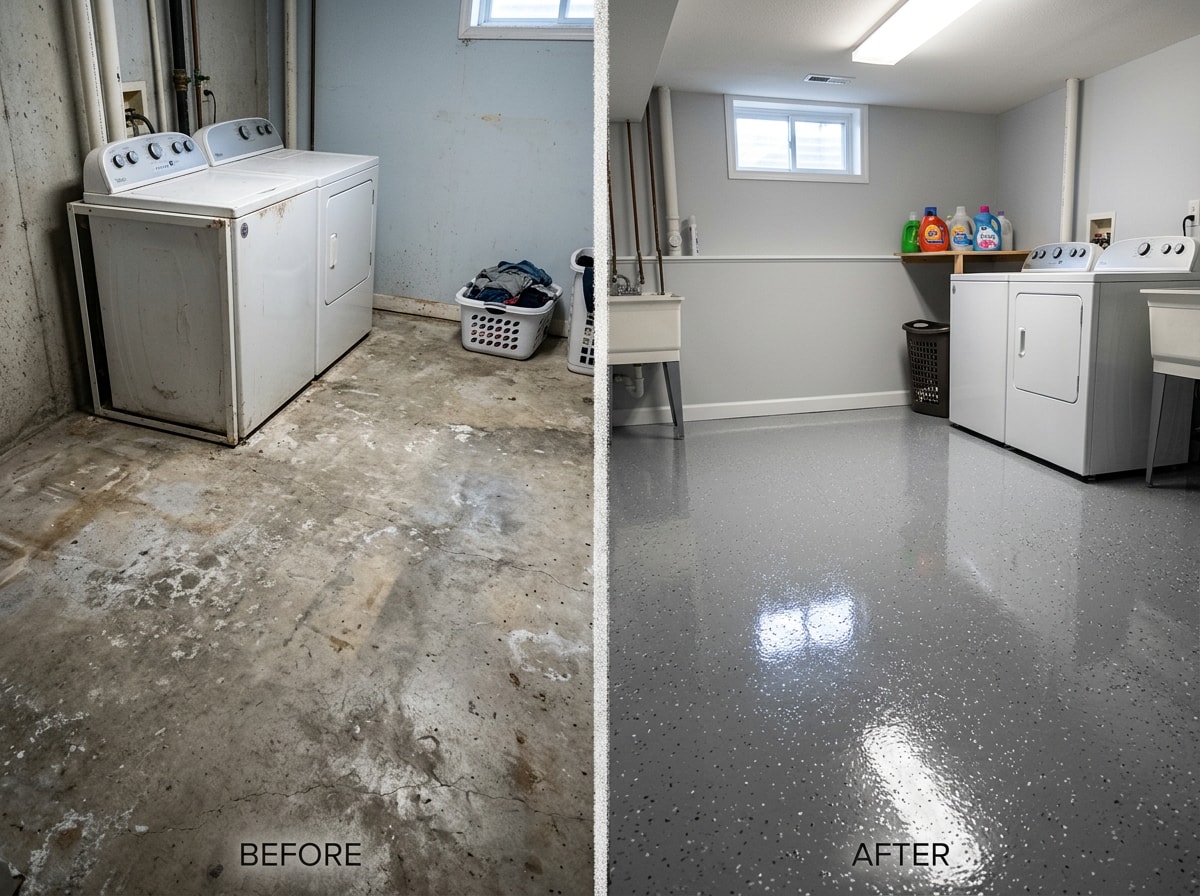
Bare concrete doesn't need a full tear-out to perform better. Concrete stain, epoxy coating, or a floor paint designed for below-grade use transforms the surface for a fraction of a full flooring install.
| Flooring Option | Cost Level | Best For |
|---|---|---|
| Sealed/painted concrete | Lowest | Budget refreshes, utility-forward rooms |
| Vinyl plank | Mid | Warmth underfoot, strong water resistance |
| Porcelain tile | Highest | Long-term durability near the washer |
Whatever you choose, waterproof flooring matters most directly beneath the washer, where small leaks are common. Moisture is the real enemy of below-grade concrete: in a basement, vapor can diffuse from the wetter ground through concrete walls and floors toward the drier basement interior , according to University of Minnesota Extension research on basement moisture. That's why sealing the floor and installing a vapor barrier before finishing it matters more here than it would in an above-grade room.
Ceiling Options for an Unfinished Basement Laundry Room
Open joists and exposed wiring don't have to stay that way forever. A suspended grid with lightweight tiles in white or light gray reflects more light and instantly makes the room feel finished, while keeping pipes and wiring accessible for future repairs.
A fully drywalled ceiling looks more polished but hides utilities behind it, which makes the next repair more expensive. For a basement laundry room specifically, where washer supply lines and drain pipes run overhead, the removable-tile approach is usually the more practical trade-off.
Wall Treatments for an Unfinished Basement Laundry Room
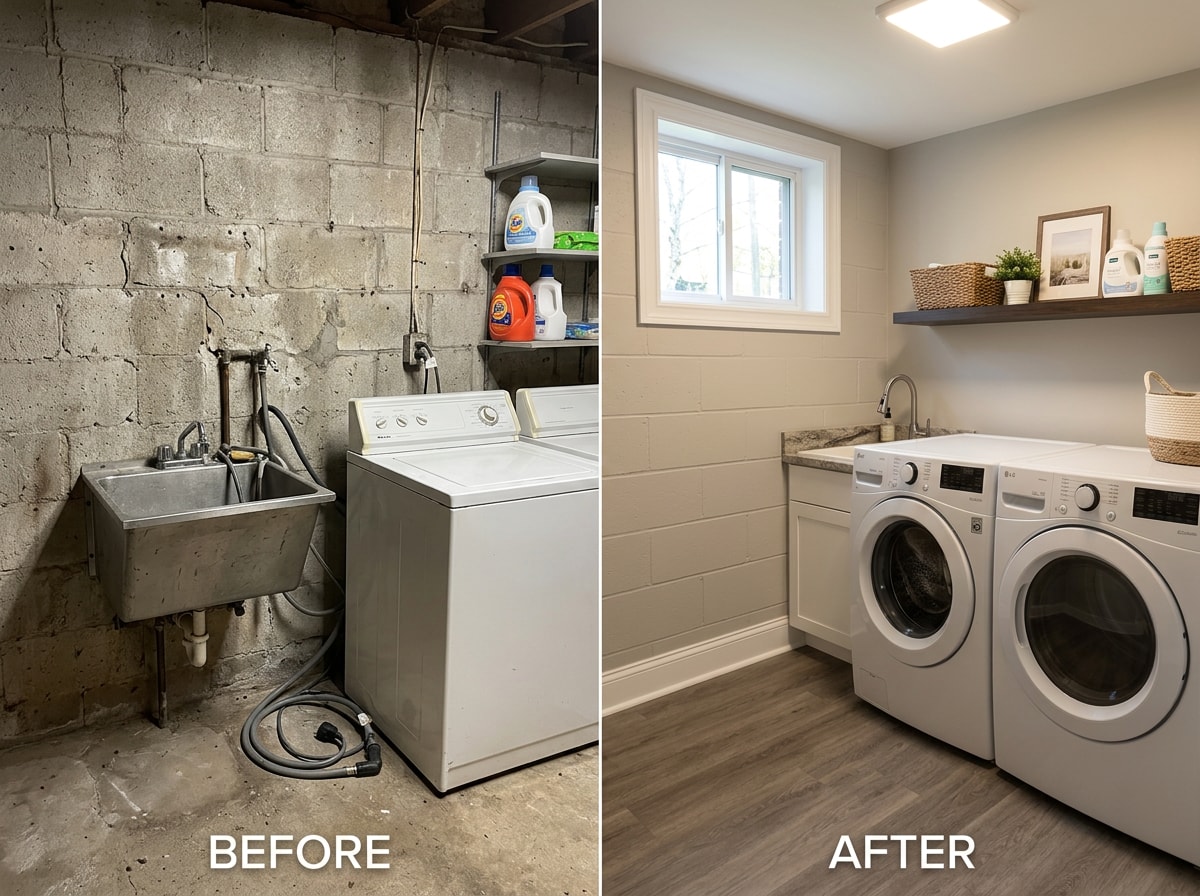
Paint remains the lowest-cost, highest-impact upgrade for any basement wall. A gallon of masonry-grade paint costs far less than drywall, insulation, and framing, yet changes the entire feel of the room.
Clean and prime bare concrete or block before painting so the finish adheres and doesn't peel from moisture later. Light, warm colors such as soft white, warm gray, or pale sage bounce whatever light you have and make a windowless room feel less like storage space.
If the room shares a wall with a bedroom or living space, insulation batts in the wall cavity or a sound-dampening mat under the washer cut down on vibration and hum. For walls that need more than paint, framing, or insulation work, our structural repair services team can evaluate what's behind the surface first.
Small Design Touches and a Shopping List
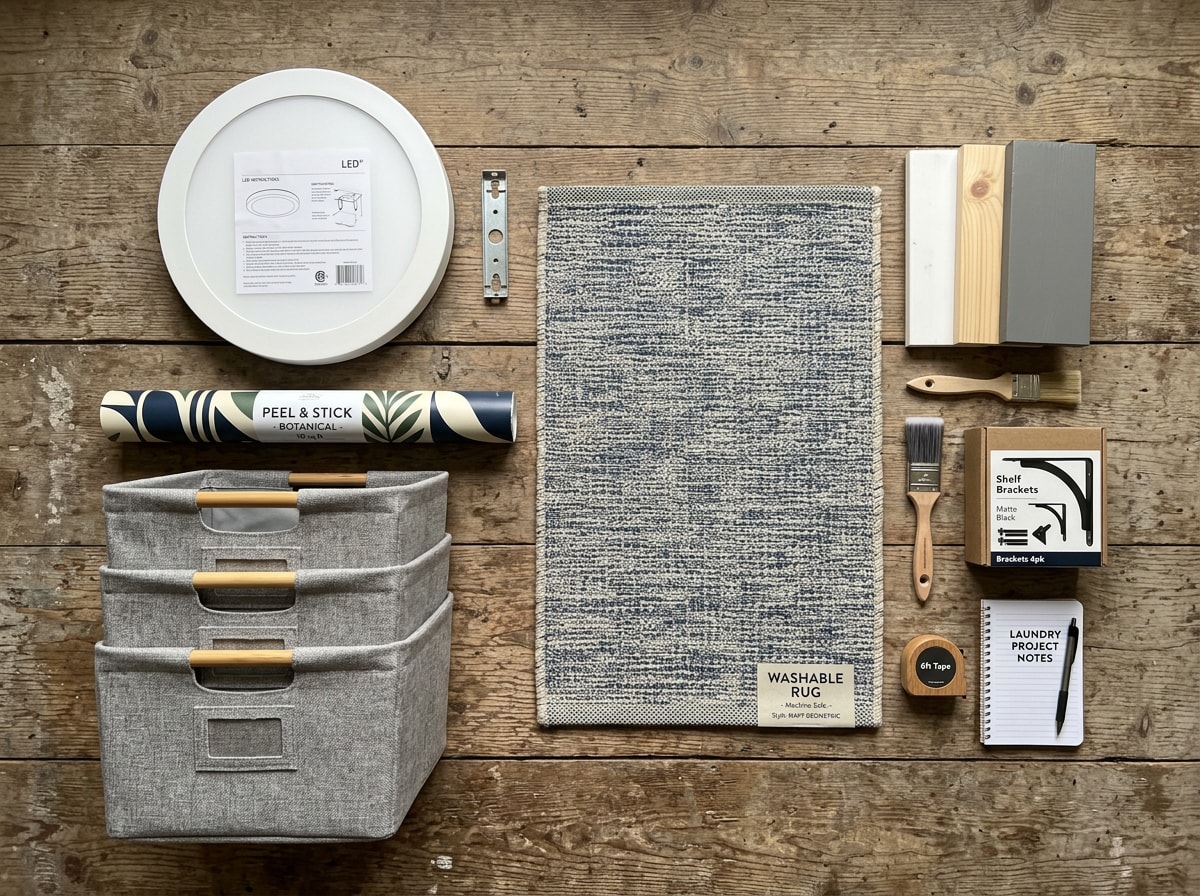
Small decor touches round out a basement laundry makeover without adding real cost: a piece of wall art, a wallpaper accent wall, a washable rug, or a few hardy plants give the space personality beyond pure function.
A practical basement laundry shopping list usually includes:
- An energy-efficient LED fixture
- Stackable storage bins
- A washable rug for the floor in front of the machines
- Peel-and-stick wall covering for a quick accent
- Over-the-door hanging racks and labeled fabric bins
- A slim rolling cart for supplies
Many of the biggest visual upgrades come from home improvement retailers rather than specialty suppliers, so there's no need to overspend to see a real difference.
For a deeper cost and timeline breakdown that applies to above-grade laundry spaces too, our laundry room remodel guide for Hugo, MN covers budgeting in more detail. For a broader look at remodeling options across your home, visit our homepage.
FAQ
How much does it cost to remodel a basement laundry room in Hugo, MN?
Costs range from about $500 for a cosmetic refresh to $25,000 or more for a full build-out with new plumbing and electrical. Most homeowners land in the $3,500 to $9,000 range for a mid-level remodel with new flooring, cabinets, and lighting. Get a free estimate for a number specific to your space.
Can you make an unfinished basement look finished on a budget?
Yes. Paint, lighting, and storage are the three highest-return, lowest-cost moves for a budget basement laundry makeover. Together they address the three biggest complaints about unfinished basements (dark walls, poor visibility, and cluttered surfaces) without touching plumbing or electrical systems.
What flooring is best for a basement laundry area?
Sealed concrete, vinyl plank, and porcelain tile are the three strongest choices for Minnesota basements prone to seasonal moisture. Sealed concrete costs the least, vinyl plank adds warmth and water resistance, and tile holds up longest directly under the washer. Any of them should sit over a vapor barrier to block ground moisture.
Do I need to vent a dryer in a basement laundry room?
Standard dryers need a vent that runs outdoors, typically through rigid metal duct rather than flexible plastic, to reduce lint buildup and fire risk. If your basement doesn't have an easy path to an exterior wall, a ventless or condensing dryer is the workaround, though it costs more upfront than a standard vented unit.
Can I combine laundry and utility functions in one basement room?
Yes. Combining a utility sink, water heater, and laundry appliances in one zone keeps plumbing runs shorter and often reduces installation costs. The layout just needs enough clearance around each appliance for safe, comfortable use.
Do I need a permit for plumbing or electrical upgrades?
Generally, yes. Permits are required for all new construction and most remodeling, alteration and repair work in the City of Hugo . Rules vary by project scope, so confirm directly with the City of Hugo Building Department before work begins.
How can I make the most of concrete walls and floors in my basement laundry room?
Polished or stained concrete floors paired with painted concrete walls create an intentional, low-maintenance industrial look rather than something to hide. Adding warm lighting and wood-tone shelving softens that look so the space still feels inviting.
Whether you're planning a weekend refresh or a full build-out with new plumbing, contact BRZ Construction for a free estimate on your Hugo basement laundry room makeover.
About the author: This guide was prepared by the BRZ Construction team, a general contractor serving Hugo and the greater east metro, based on project experience across area basements. Questions about your specific space can be directed through our contact page.