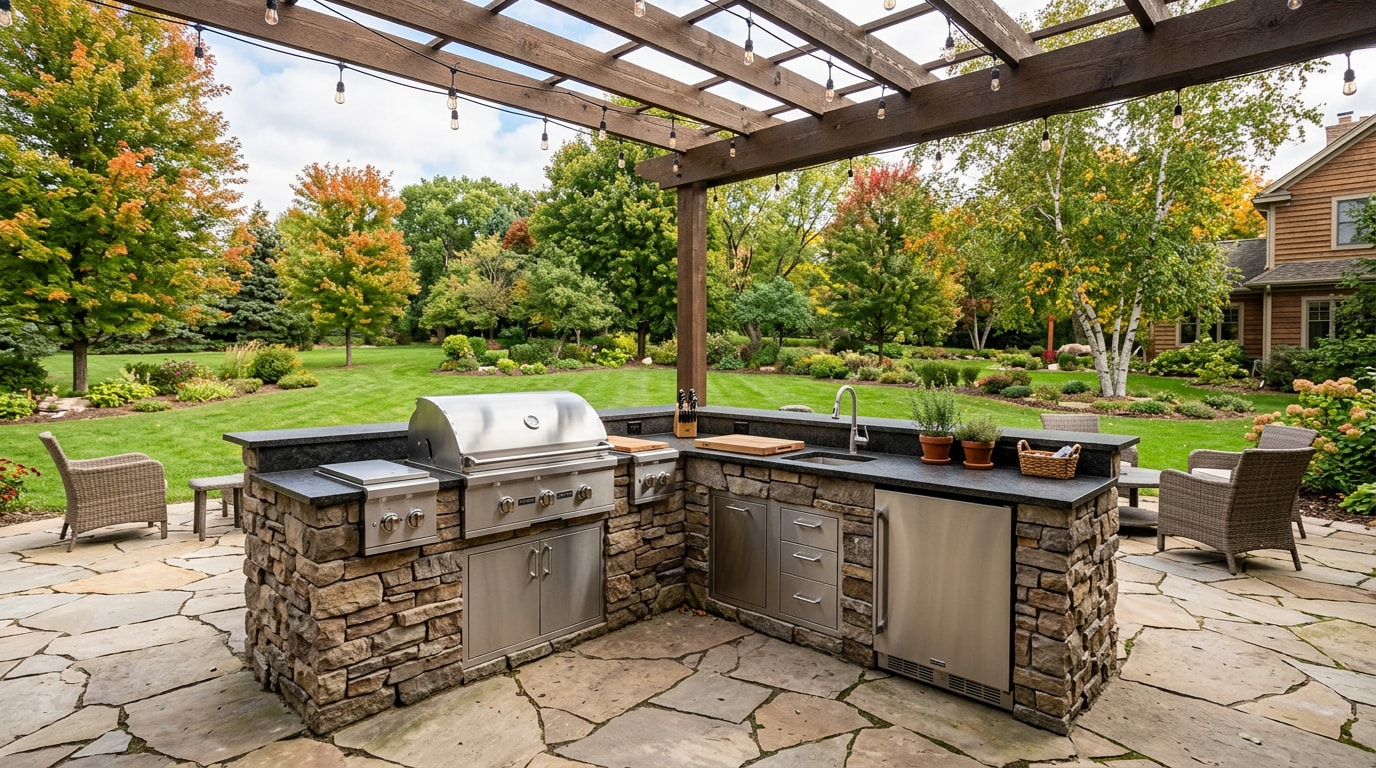
Outdoor kitchen remodeling in Lake Elmo, MN means designing around a six-month cooking season instead of a twelve-month one. That single fact drives every decision in this guide, from layout to countertop material to how you winterize the thing every October.
On our own Lake Elmo and east-metro builds, the backyard kitchens that hold up are the ones where frost protection and material choice got as much attention as the appliance package. The ones that don't hold up usually skipped one of those two things to save money upfront.
Is an Outdoor Kitchen Worth It in Lake Elmo?
Resale payback varies by neighborhood, finish level, and the housing market at the time you sell, so treat any specific ROI percentage you see online as a rough estimate, not a promise. What's more reliable is the day-to-day value: more time outside, easier entertaining, and a dedicated space that actually gets used from May through October.
If you're comparing an outdoor kitchen against other backyard upgrades, it's worth looking at our completed projects to see how an outdoor kitchen fits into a wider backyard plan, or start at the company homepage to browse the full range of remodeling work we handle in the east metro.
Picking a Layout That Fits Your Lot
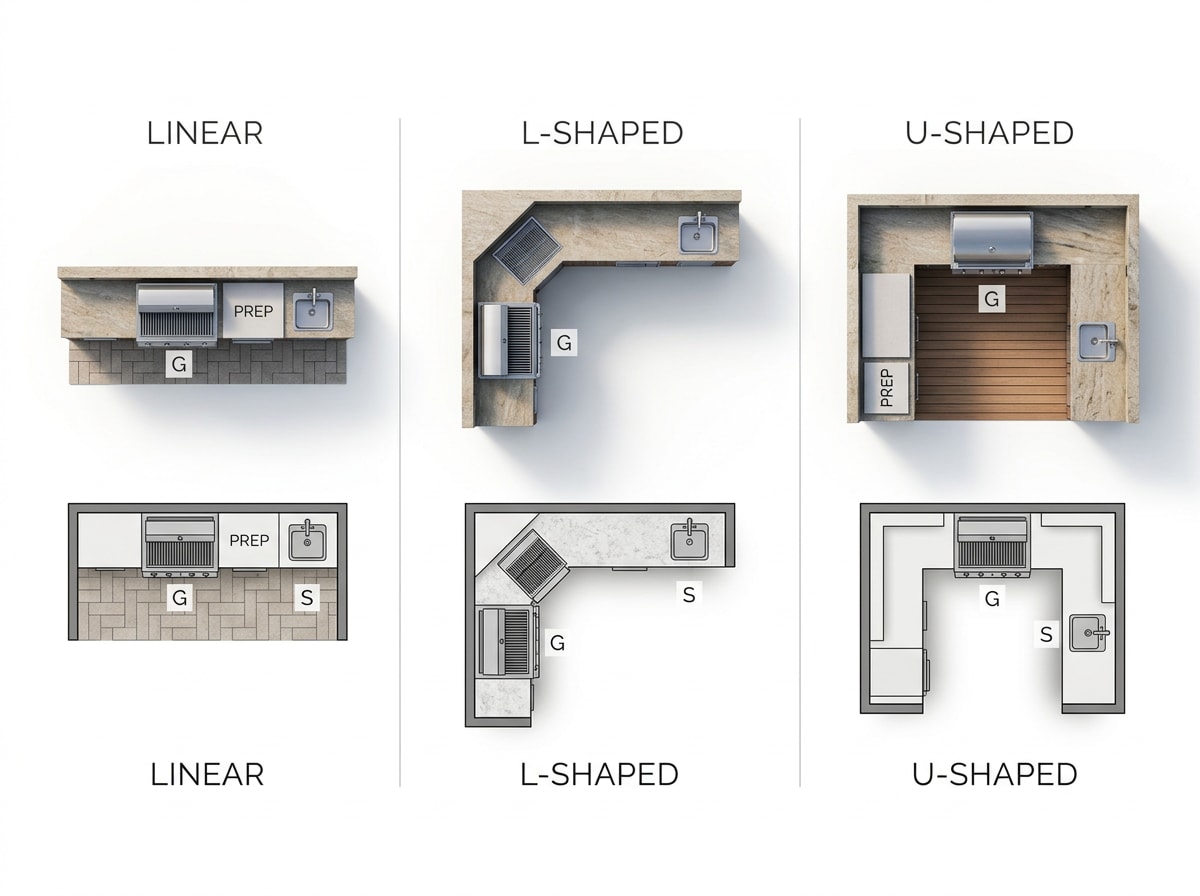
Layout decisions made before construction starts shape almost everything that follows, including cost, workflow, and how well the space handles a Minnesota winter.
| Layout | Best For | Footprint Needed | Tradeoff |
|---|---|---|---|
| Linear | Smaller lots, tighter patios | Smallest | Least counter space |
| L-shaped | Mid-size backyards, some separation from seating | Moderate | Needs a corner or wraparound area |
| U-shaped / island | Larger backyards, main entertaining hub | Largest | Highest cost and space requirement |
A linear layout places appliances along one wall and needs the simplest utility runs, which makes it the most budget-friendly starting point. An L-shaped layout adds a second leg and creates a natural work triangle between the grill, prep space, and sink, the same logic used in indoor kitchen design.
A U-shaped or island layout offers the most counter space and storage but needs a bigger budget and a bigger yard. It tends to make sense once the outdoor kitchen becomes the main gathering spot rather than a secondary feature.
Pick the shape before finalizing materials or appliances. Changing layout mid-project after gas lines or footings are in means tearing out finished work.
Materials and Appliances That Survive a Minnesota Winter
Freeze-thaw cycles, road salt, and big humidity swings put real stress on anything left outside year-round. Material choice, more than any single design decision, determines whether an outdoor kitchen lasts twenty years or needs rebuilding in five.
Freeze-thaw resistant materials like 304 stainless steel, outdoor-rated quartz, and dense natural stone hold up best because they resist moisture absorption and the cracking that comes from repeated freezing. Softer, porous stone or unsealed concrete tends to spall within a few winters.
| Material | Upfront Cost | Freeze-Thaw Performance | Maintenance | Realistic Lifespan |
|---|---|---|---|---|
| 304 stainless steel | $$$ | Excellent | Low | 20+ years |
| Outdoor-rated quartz | $$$ | Good | Low-Moderate | 15-20 years |
| Granite | $$ | Good | Moderate | 15-25 years |
| Concrete (sealed) | $$ | Moderate | Moderate | 10-15 years |
| Porcelain pavers/slabs | $$$ | Excellent | Low | 20+ years |
| Natural stone veneer | $$-$$$ | Good to Excellent | Moderate | 20-30 years |
Porcelain slab has become one of the more popular counter choices on recent Lake Elmo projects precisely because it shrugs off freeze-thaw cycling without annual sealing. We cover pricing specifics in our porcelain countertops cost guide for Lake Elmo.
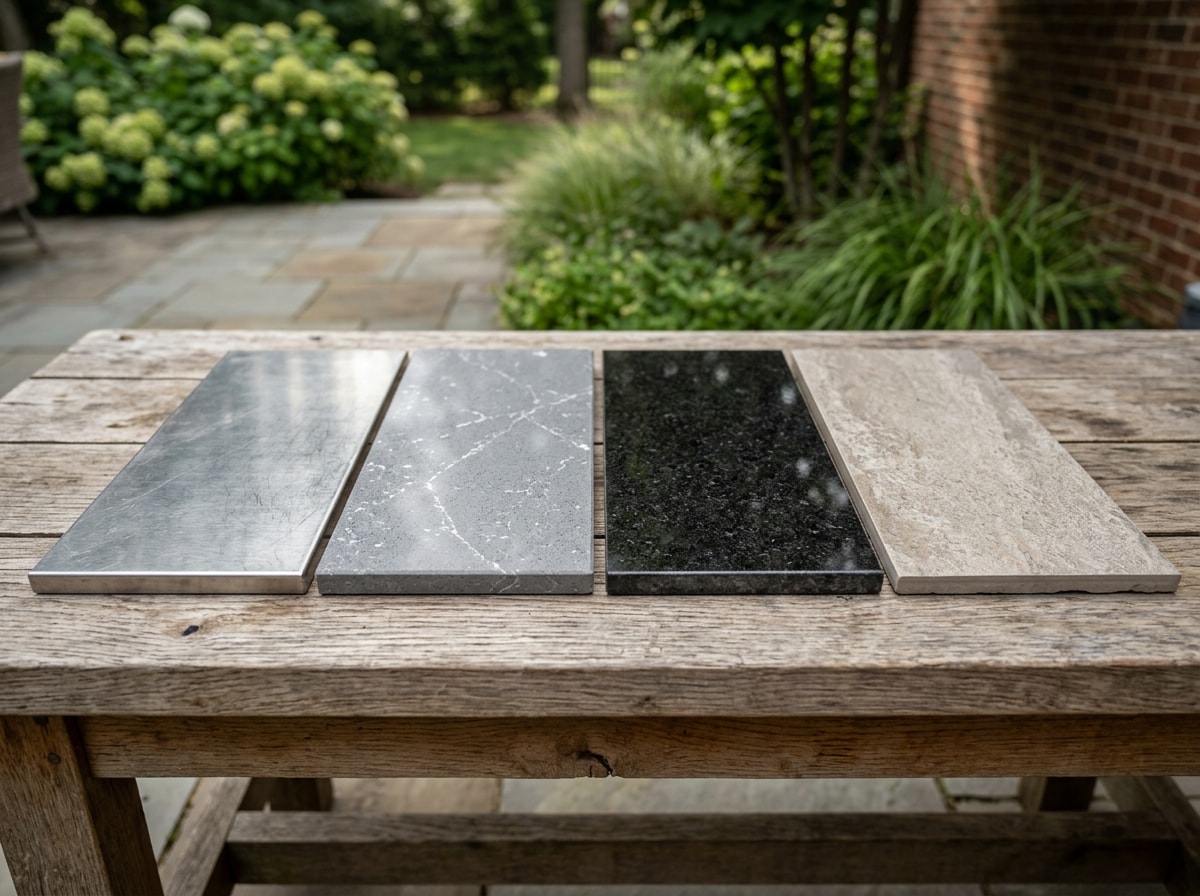
Indoor-rated appliances fail quickly outdoors because they lack weatherproof seals and corrosion-resistant components built for temperature swings. An outdoor-rated refrigerator uses compressors and gaskets designed for a wider temperature range than a standard kitchen fridge.
A built-in grill needs an outdoor rating on its control knobs, igniter, and wiring, not just its cooking surface. Side burners and sinks need the same scrutiny, look for marine-grade or 304 stainless construction on anything exposed to the elements.
Frost, Wind, and the Realistic Off-Season
Minnesota's building code sets a real, enforceable minimum for how deep a footing has to go before it counts as frost-protected. In the absence of a determination by an engineer competent in soil mechanics, the minimum allowable footing depth in feet due to freezing is five feet in Zone I and 3-1/2 feet in Zone II. Washington County falls in Zone II, so any masonry outdoor kitchen built on a shallow pad instead of a proper frost footing is the single most common failure point we see on backyard projects here.
Orientation matters too. Positioning the kitchen to block prevailing wind, and adding a pergola or awning, can stretch the comfortable cooking season by several weeks on either end. For homeowners who want a fully enclosed, heated space instead, a four-season porch solves the winter-usability problem in a different way than a covered kitchen can.
Most Lake Elmo homeowners get heavy use out of an outdoor kitchen from roughly May through October, with lighter grilling-only use possible in the shoulder months for anyone willing to bundle up. Expecting true year-round use without special precautions isn't realistic for most backyard setups here.
Before the first hard freeze: drain and shut off water lines, empty and unplug outdoor refrigeration, and cover grills and appliances with weatherproof covers. Skipping this step is the fastest way to crack plumbing or ruin a compressor before spring. If your outdoor kitchen sits next to an existing patio or deck that also needs attention before winter, our deck installation team can handle both in the same visit.
What an Outdoor Kitchen Costs in Lake Elmo
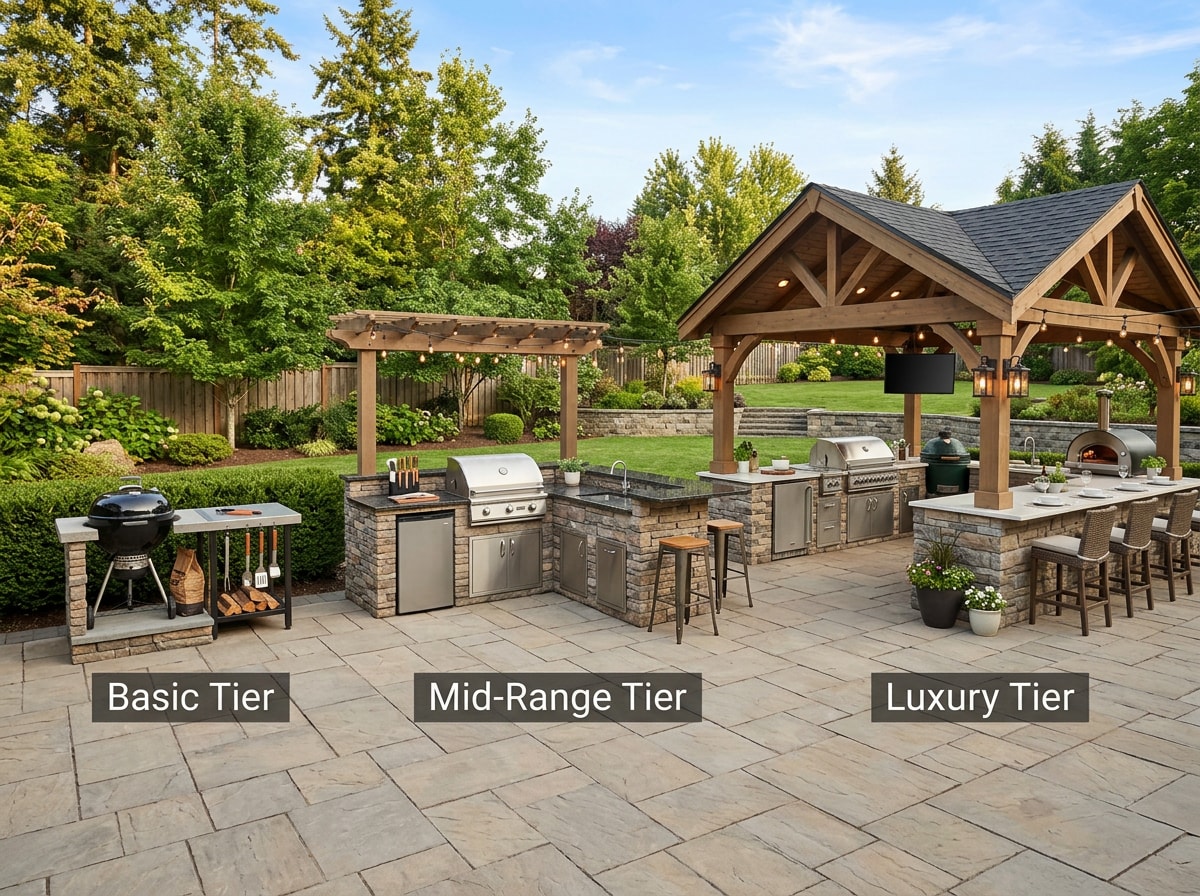
Costs vary widely based on footprint, materials, and appliance package, but most Minnesota projects fall into three general tiers. These ranges reflect current material and labor pricing across the Twin Cities east metro and should be treated as planning estimates, not fixed quotes.
| Tier | Typical Range | What's Included |
|---|---|---|
| Basic | $8,000 - $18,000 | Simple linear layout, grill island, basic stone or concrete finish |
| Mid-range | $18,000 - $40,000 | L-shaped layout, outdoor fridge, upgraded counters, added lighting |
| Luxury | $40,000 - $85,000+ | U-shaped/island layout, full appliance suite, premium stone, covered structure |
The biggest cost drivers are utility runs (gas and electrical), the appliance package, and whether the structure is framed or full masonry. Masonry construction costs more upfront but typically outlasts framed-and-veneered builds in freeze-thaw conditions.
Want a number specific to your lot instead of a general range? Get a free estimate and we'll walk the site with you before pricing anything.
Permits You'll Likely Need
Most outdoor kitchen projects require more than one permit. Gas line work typically needs a plumbing or mechanical permit, new electrical circuits need an electrical permit, and larger structural additions, like a covered patio or significant masonry footprint, may need a separate building permit.
The Minnesota Department of Labor and Industry (DLI), Construction Codes & Licensing Division, is the adopting authority for the Minnesota State Building Code. Lake Elmo and Washington County homeowners should confirm specifics with their local building department before starting work, since enforcement and inspection scheduling happen at the municipal level even though the code itself is statewide.
Skipping required permits creates problems later, from failed inspections at resale to insurance complications after a gas or electrical issue. It's worth confirming requirements early, not after construction begins. See our Lake Elmo service area page for more on how we handle local permitting on projects in your city.
How We Approach an Outdoor Kitchen Build
A typical project follows a consistent sequence regardless of size. It starts with layout and space planning, followed by material and appliance selection based on budget and climate needs.
From there, construction moves through these phases:
- Electrical and gas rough-in
- Masonry or framing work
- Appliance installation
- Lighting and finishing details (countertops, backsplash, trim)
Finishing work happens last, once the structural phase is complete and inspected. This is also where general contracting experience matters most, since gas, electrical, and masonry trades all need to be sequenced correctly rather than scheduled independently. Learn more about how we manage that sequencing on our general contractor services page.
FAQ
What's the biggest mistake to avoid when building an outdoor kitchen?
Skipping thorough layout and utility planning before construction begins. Rushing into appliance choices or counter placement without mapping gas, electrical, and workflow needs first often forces expensive rework later, especially once concrete is poured or gas lines are run.
How long does it take to build an outdoor kitchen?
Most projects take four to ten weeks from groundbreaking to completion, though the exact timeline depends on scope and permitting speed. Simple linear kitchens move faster than full U-shaped builds with covered structures. Permitting and utility coordination often add more time than the actual construction.
Can you use an outdoor kitchen during a Minnesota winter?
Grilling is often still possible once the kitchen has been properly winterized, since most grills handle cold temperatures fine on their own. The real cold weather issue is that propane stops vaporizing near -44 degrees Fahrenheit, and tank pressure drops before that, which makes the burner weak. Water lines, sinks, and refrigeration typically get shut down and drained for the season to prevent freeze damage. For official guidance on cold-weather cylinder storage and handling, see the Propane Education & Research Council's safety resources.
What's the best countertop material for a Minnesota outdoor kitchen?
304 stainless steel, outdoor-rated quartz, and porcelain slab perform best against freeze-thaw cycling with the least maintenance. Granite and natural stone veneer also hold up well but need periodic sealing to stay watertight through winter.
Does an outdoor kitchen add value to a Lake Elmo home?
It typically supports resale value and buyer interest, but the exact payback depends on your neighborhood, finish quality, and the market at the time you sell. The more consistent return is daily-use value: more outdoor living time for the years you're in the home.
Ready to plan your own layout, materials, and budget? Request a free estimate and we'll put together a plan built for your lot and your winters.